

Breakfast is a great opportunity to offer babies and toddlers a variety of nutrient-rich foods to support growth, development, play and learning [1]. Whether you’re just starting solids with a 6-month-old or feeding a busy toddler before daycare, a balanced breakfast can help provide energy [1], plus introduce new flavours and textures.
This guide covers everything you need to know about feeding babies and toddlers at breakfast time, including:
- Why breakfast matters
- Age-appropriate meal ideas
- Foods to avoid
- Key nutrients to focus on
- Easy recipe ideas by breakfast type
I hope you find it useful in providing nourishing, easy breakfasts for you little one!
➡️ IS BABY JUST STARTING SOLID FOODS? Check out my Complete Guide to Baby Purees too. It has lots of baby feeding information, including which foods to try first, introducing allergens, how to make and store baby food, plus other tips.
When reading this guide, please remember that I am not a child health practitioner, dietician or nutritionist. The information in this guide is for general information and educational purposes only. Always consult your child health practitioner or doctor if unsure about baby/toddler feeding or nutrition!
A note on allergenic foods
This guide includes breakfast suggestions which may contain common allergenic foods. The Australasian Society of Clinical Immunology and Allergy advises that, for most babies, introducing allergenic foods in the first year may reduce the risk of developing a food allergy [2, 3]. Current guidelines recommend introducing common allergenic foods within the first year of life, with well cooked egg and peanuts (as peanut butter or paste) to be introduced soon after baby has started solids [2, 3].
Common allergenic foods include:
- Peanut
- Egg
- Cow’s milk
- Tree nuts
- Wheat
- Soy
- Fish
- Shellfish
- Sesame
Allergenic foods should be introduced one at a time, given in age-appropriate texture and then continued regularly (at least once per week) once tolerated.
⚠️Note! If your baby has reacted to an allergenic food, has eczema, your family has a history of food allergy and/or you’re worried about reactions to foods, consult your child health practitioner or doctor [4]. See the ASCIA Guideline [2] for more information on introducing allergenic foods.
Why breakfast matters for babies and toddlers
Breakfast helps replenish energy stores after a night’s sleep [1]. It also provides an opportunity to include important nutrients such as iron, protein, healthy fats, fibre and calcium in a child’s diet. These nutrients are unlikely to be ‘caught up on’ during the day if a child skips breakfast [1].
A varied, nutritious breakfast can help:
- Support growth and development
- Provide lasting energy throughout the morning
- Introduce a variety of foods and textures
- Encourage self-feeding skills
- Establish healthy eating habits and a varied diet from an early age
Remember that every child has a different appetite. Some babies and toddlers wake up hungry, while others may prefer a smaller breakfast and eat more later in the day. How much food a child needs may also change from day to day, depending on their growth and activity level levels [5].
Breakfast ideas by age
Below are some breakfast ideas for 6-month-old babies, 7 to 12-month-old babies and toddlers. If it’s an idea that I have a recipe for, you can follow the link to full instructions on how to make it.
Breakfast for 6-month-old-babies
When starting solids, breakfast is often simple. Soft textures and single-ingredient foods can help babies learn new tastes and textures.
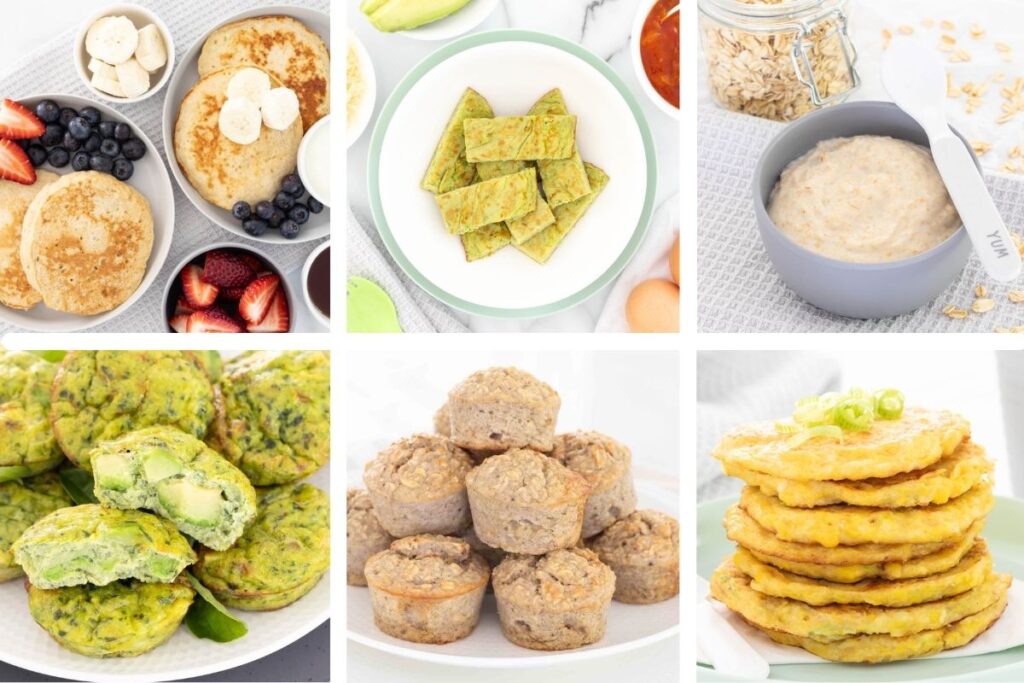
Suitable breakfast options include:
- Baby Oatmeal
- Smooth fruit purees
- Plain full-fat yoghurt
- Avocado and Egg Puree
- Stewed Prunes (mashed or pureed)
- Mashed banana or avocado
Remember that iron-containing foods such as iron-fortified cereals, cooked plain tofu, legumes/beans, pureed meat and poultry are recommended to be included in the first foods [6]. If not serving at breakfast, be sure to include iron-containing nutritious foods across the day, to avoid iron deficiency in babies [6, 7].
Breakfast for 7 to 12-month-old babies
As babies become more comfortable eating solids, breakfast can include a wider variety of textures and finger foods.
Try:
- Avocado Cottage Cheese Toast
- Soft Avocado Egg Muffins
- Oat Pancakes
- Avocado Omelette
- Homemade Baked Beans with toast fingers
- Sweetcorn Fritters
- Banana Greek Yoghurt Pancakes
- Apple Mango Smoothie
At this stage, babies often enjoy feeding themselves while continuing to explore new foods. It’s normal for babies to refuse new foods at first, and gradually build up to acceptance [5].
Breakfast for toddlers
Toddlers are developing preferences and independence. Offering a variety of familiar foods alongside new options can help encourage balanced eating across the 5 food groups [1].
Toddler breakfast ideas include:
- Banana Oat Muffins
- Apple Oat Muffins
- Low-sugar wholegrain cereal
- Pumpkin and Feta Egg Muffins
- Vegetarian Zucchini Slice
- Berry Oat Smoothie
- Homemade Granola (chopped) with yoghurt
- Boiled eggs
- Potato and Egg Scramble
- Wholegrain toast or flatbread
- Small Batch Mini Pancakes (a little treat!)
Lots of toddlers enjoy breakfasts that can be prepared ahead and served quickly, which is great for busy parents!
Building variety in baby’s diet from the start
To meet the growing nutritional needs of your baby/toddler, it’s important to include a variety of foods from the five food groups in their diet [1]. You can introduce any number of new foods at a time (excluding allergenic foods, noting the allergen guidance at the beginning of this guide), and in any order [4].
From 12 months of age, solid foods should be the main source of your baby’s nutrition [4].
Foods to avoid for baby and toddler breakfasts
When feeding babies and toddlers, the following should be avoided:
- Honey (under 12 months) – Due to the risk of infant botulism [8]. This includes honey added to baked goods.
- Added salt – Babies’ kidneys are still developing, and they don’t need added salt [4].
- Added sugar – Not recommended in infant foods or drinks [4]. Naturally occurring sugars in fruit and dairy are fine, but avoid sweetened yoghurts, juice, cordials and sugary snack foods.
- Reduced-fat dairy (under 2 years) – Full-fat dairy is recommended for children under two years, as dietary fat supports growth and brain development [8]. Choose full-cream milk, yoghurt and cheese unless otherwise advised by your health professional.
- Whole nuts and hard, round foods (under 3 years) – These pose a choking risk [9]. Offer nut butters thinly spread, cook foods until soft, and modify food shapes appropriately.
- Raw or unpasteurised animal products – Avoid raw eggs, raw seafood and unpasteurised dairy due to food safety risks [8].
Nutrients to focus on at breakfast
The key is balance. By 12 months of age, it’s recommended that children are eating a variety of nutritious foods from the 5 food groups [7, 10]:
- Vegetables and legumes/beans
- Fruit
- Grain (cereal) foods, mostly wholegrain and/or high cereal fibre varieties
- Lean meats and poultry, fish, eggs, tofu, nuts and seeds and legumes/beans
- Milk, yoghurt, cheese, and/or alternatives
Iron-rich breakfasts
Iron is one of the most important nutrients for babies and young children, and so iron-containing foods are recommended to be included in first foods [7].
Breakfast foods that can contribute iron [11] include:
- Oatmeal
- Iron-fortified wholegrain cereals
- Eggs
- Wholemeal or wholegrain breads
- Legumes e.g. baked beans (making sure that they’re low in sodium and sugar)
- Tofu
- Hummus
- Dried fruit e.e. apricots, sultanas
Animal-based (haem) iron is more easily absorbed than plant-based (non-haem) iron [11]. Pairing iron-containing foods with vitamin C sources such as fruit, however, can help support the absorption of non-haem iron [11].
Protein for growth
Protein is a nutrient that supports the growth, repair and functioning of cells in the body [12]. Generally, the nutritional value of protein depends on the amount of essential amino acids it contains [12]. Higher-quality protein includes animal products, soy products and plant proteins (like beans, lentils, nuts and wholegrains).
Protein-containing breakfast foods include:
- Eggs
- Legumes and beans
- Greek yoghurt
- Cottage cheese
- Other dairy prducts (milk, yoghurt, cheese)
- Nuts and seeds
Meeting your child’s protein needs can be easily achieved by giving them a variety of foods from the 5 food groups [6, 12]. Foods such as omelettes, egg muffins, beans on toast and Greek yoghurt with fruit and cereal are simple ways to include protein at breakfast.
Dietary fat for energy
For children up to 24 months of age, dietary fat is an important source of energy and essential fatty acids [8]. Because of their high energy needs required for growth, infants should not be given reduced fat varieties of milks [13]. If serving milk at breakfast, choose full-fat for children over 12 months old. Infants under 12 months of age should continue to have breast milk or infant formula as their main milk source [13].
Breakfast recipe ideas by type
I’ve grouped breakfsat ideas into clusters to make it easy to choose ideas based on oats, eggs, pancakes, smoothies, muffins and make-ahead breakfasts. You’ll find a lot of these recipes in our baby and toddler breakfast recipes collection.
Oat-based breakfasts
Oats are affordable, versatile and easy to adapt for different ages and feeding stages.
Recipes to try:
- Baby Oatmeal
- Oat Pancakes
- Banana Oat Muffins
- Apple Oat Muffins
- Air Fryer Granola

Egg-based breakfasts
Eggs provide protein, healthy fats and important vitamins and minerals.
Recipes to try:
- Avocado Omelette
- Potato and Egg Scramble
- Pumpkin and Feta Egg Muffins
- Avocado and Spinach Egg Muffins
- Avocado and Egg Puree
Pancakes
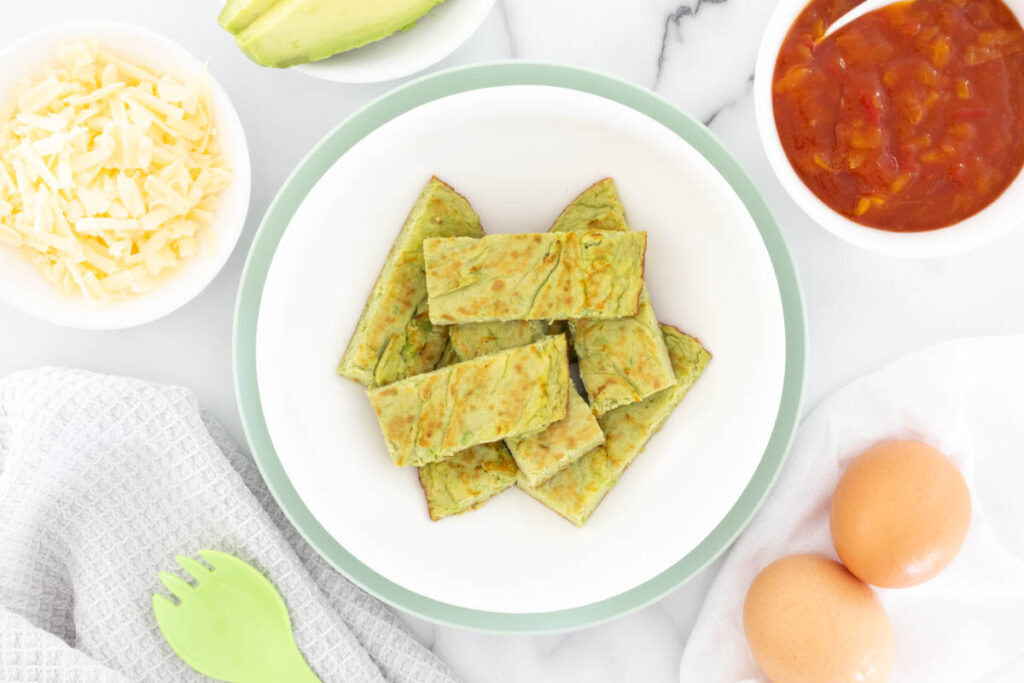
Pancakes are a favourite finger food for babies and toddlers. You can make a small batch fresh or prepare them in bulk for making ahead. Just be mindful of any added sugar, it’s best to avoid for babies.
Recipes to try:
- Banana Greek Yoghurt Pancakes
- Oat Pancakes
- Small Batch Mini Pancakes

Smoothies
Smoothies can be a simple option for toddlers and older babies who are already comfortable with drinking from an open cup or straw cup.
Recipes to try:
- Berry and Oat Smoothie
- Apple and Mango Smoothie

Muffins
Muffins, whether egg or oat-based, are convenient for busy mornings and lunch boxes.
Recipes to try:
- Banana Oat Muffins
- Apple Oat Muffins
- Pumpkin and Feta Egg Muffins
- Avocado and Spinach Egg Muffins

Make-ahead breakfast ideas
Preparing breakfast ahead of time can make mornings a whole lot easier!
Some family favourites include:
- Batch-cooked pancakes
- Oat-based muffins
- Egg muffins
- Zucchini Slice
- Homemade Baked Beans
- Stewed Prunes
Many of these recipes can be made in advance and stored in the fridge or freezer. Store them (sealed and labelled) in individual portions for easy defrosting and reheating.
Frequently asked questions:
What should a baby eat for breakfast?
A baby breakfast can include iron-containing foods such as oatmeal, eggs and beans, yoghurt, fruit, and soft finger foods. The best breakfast is one that matches your baby’s age, developmental stage and appetite.
Is oatmeal a good breakfast for babies?
Yes, it can be! Oatmeal is easy to prepare, contains fibre and can be served with fruit, yoghurt, or nut butters when age appropriate.
What is a healthy breakfast for toddlers?
A healthy toddler breakfast typically includes a combination of protein, healthy fats, fibre, and carbohydrates. Think of offering a couple of foods from across the 5 food groups, aiming for balance across all 5 groups in a day. Examples include egg muffins with fruit, oatmeal with yoghurt, or pancakes served with fruit and milk.
Can I make baby breakfasts ahead of time?
Lots of breakfast recipes can be prepared in advance and stored safely in the fridge or freezer, including oat muffins, pancakes, baked beans, zucchini slice and egg muffins. Remember to be food-safe when preparing, storing, defrosting and reheating food for baby – you can check out the storage and reheating tips in each of my recipes.
Other useful baby food recipes
Add these to your recipe tin:
- Nut and Seed Mix – A selection of ground nuts and seeds to help maintain baby’s exposure to tree nuts, peanut and sesame allergens, once safely introduced. Mix it with oatmeal, yoghurt or into baked goods.
- Low Sodium Hummus – A recipe designed for babies and toddlers, it’s great for spreading on wholegrain toast or flatbread.
Are you ready to now conquer baby/toddler breakfasts?! Browse all of our baby and toddler breakfast recipes to find easy, family-friendly options to fit every stage of feeding.
For more detailed information on baby and toddler feeding, see the below references.
Was this guide helpful? Please leave a 📝 comment below. I love hearing from you! And don’t forget to follow me on Facebook, Instagram and Pinterest too for more baby food recipes and child feeding information.
Happy cooking,
Chloe
References
[1] Raising Children Network (Australia) Ltd (RCN). Breakfast: Encouraging children to eat and enjoy it. (2025). Retrieved 24 June 2026 from https://raisingchildren.net.au/toddlers/nutrition-fitness/breakfast-lunches/breakfast.
[2] Vale, S.L., Netting, M.J., Hornung, C.J., Smith, J., Roche, I., McWilliam, V., Hollinshead, K., South, C., Young, A., Rueter, K., Perrett, K.P., Palmer, D.J., Joshi, P., Campbell, D.E., Koplin, J.J. & Ford, L.S. (2026). ASCIA Guideline: Infant Feeding for Food Allergy Prevention. Clinical & Experimental Allergy 0, 1–11. https://doi.org/10.1111/cea.70217.
[3] Australasian Society of Clinical Immunology and Allergy (ASCIA). (2026). Infant feeding and allergy prevention – Fast facts. Retrieved 24 June 2026 from https://preventallergies.org.au/resources/library/ascia-guidelines-for-infant-feeding-for-food-allergy-prevention/.
[4] Raising Children Network (Australia) Ltd (RCN). Introducing solids: when to start. (2025). Retrieved 24 June 2026 from https://raisingchildren.net.au/babies/breastfeeding-bottle-feeding-solids/solids-drinks/introducing-solids.
[5] Queensland Government. (2019). Introducing complementary foods: Feeding from around six months. Retrieved 24 June 2026 from https://www.qld.gov.au/health/condition/child-health/diet-and-eating/introducing-complementary-foods-feeding-from-around-6-months.
[6] National Health and Medical Research Council (NHMRC). (2015). Healthy eating for infants, children and teenagers. Retrieved 24 June 2026 from https://www.eatforhealth.gov.au/eating-well/healthy-eating-throughout-all-life/healthy-eating-infants-children-and-teenagers.
[7] National Health and Medical Research Council (NHMRC). (2013). Infant feeding guidelines: Summary. Retrieved 24 June 2026 from https://www.nhmrc.gov.au/about-us/publications/infant-feeding-guidelines-information-health-workers.
[8] National Health and Medical Research Council (NHMRC). (2012, updated 2015). Infant feeding guidelines: Information for health workers. Retrieved 24 June 2026 from https://www.nhmrc.gov.au/about-us/publications/infant-feeding-guidelines-information-health-workers.
[9] The Royal Children’s Hospital Melbourne. (2025). Safety: Choking, suffocation and strangulation prevention. Retrieved 24 June 2026 from https://www.rch.org.au/kidsinfo/fact_sheets/Choking_suffocation_and_strangulation_prevention/
[10] National Health and Medical Research Council (NHMRC). (n.d.). Australian dietary guidelines 1-5. Retrieved 24 June 2026 from https://www.eatforhealth.gov.au/guidelines/australian-dietary-guidelines-1-5.
[11] State of Western Australia, Child and Adolescent Health Service. (2017). Iron deficiency. Retrieved 24 June 2026 from https://pch.health.wa.gov.au/~/media/Files/Hospitals/PCH/General-documents/Patients-and-Families/Health-facts/Iron-deficiency-diet-sheet.pdf.
[12] Better Health Channel. (2024). Protein. Retrieved 24 June 2026 from https://www.betterhealth.vic.gov.au/health/healthyliving/protein.
[13] National Health and Medical Research Council (NHMRC). (n.d.). Milk, yoghurt, cheese and/or their alternatives (mostly reduced fat). Retrieved 24 June 2026 from https://www.eatforhealth.gov.au/food-essentials/five-food-groups/milk-yoghurt-cheese-andor-their-alternatives-mostly-reduced-fat.


